chatGPT adds shopping to search: how product results are chosen
Here’s a breakdown of how the system selects and ranks product results, according to OpenAI’s documentation.

how products are selected
When ChatGPT detects a query with shopping intent, it uses a mix of signals and data sources to decide what products to show:
1. User Intent and Context
It interprets the user’s current query (e.g., “funny dog costumes”).
It can consider saved preferences or dislikes (e.g., avoiding “clowns”).
It may also use custom user instructions (e.g., “show affordable options”).
2. Structured Third-Party Data: product information is pulled from external sources and includes:
Price
Descriptions
Reviews
3. Model Reasoning: ChatGPT first forms a reasoning layer before applying search data. This helps it decide what matters most for that query whether it’s price, quality, or usability.
4. Relevance Filtering: products are filtered based on how well they align with user intent:
If a budget is mentioned, price becomes a key ranking factor.
If not, other traits like popularity or design may weigh more.
5. Safety Standards: products must meet OpenAI’s internal safety guidelines. Unsafe or inappropriate listings are removed.
OpenAI notes that ChatGPT “can occasionally make mistakes,” and users can refine or correct results by giving more details. ChatGPT selects products independently, they are not paid ads.
how results are displayed and ranked
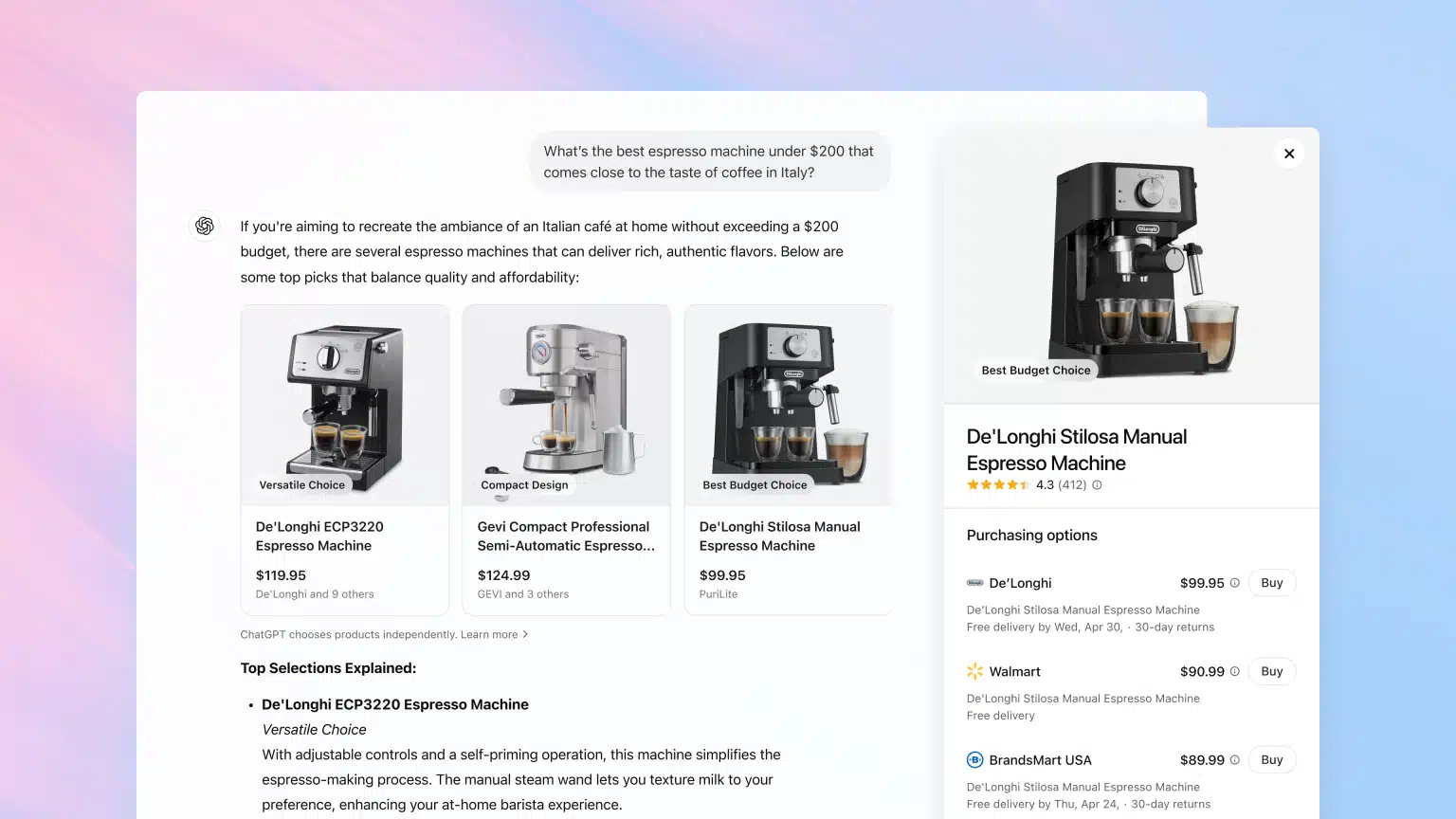
Search shopping results appear as visual carousels within the chat.
Display Format - each product includes:
An image;
AI-generated title and description;
Price (from the first listed merchant);
Link to the product page.
Labels and Tags - ChatGPT may add AI-generated tags like: “Budget-friendly” and “Most popular”. These are based on available data and not verified.
Review Summaries and Ratings - some listings include short summaries highlighting pros and cons. Ratings and review counts come from third-party sources and may differ from what appears on retailer sites.
Pricing Info - the price shown typically comes from the first merchant and it may not be the lowest or most current price. Clicking through provides more pricing options from other sellers.
Limitations - not all relevant products may appear. Data can lag behind actual stock, pricing, or shipping updates.
how merchants are chosen
Merchant data comes from third-party providers, not directly from sellers.
OpenAI does not accept merchant feeds.
Merchant order follows how third-party sources rank them.
ChatGPT does not reorder merchants based on factors like price, shipping speed, or return policy.
This update pushes ChatGPT beyond information retrieval into product discovery. It’s an early move, but one that could reshape how consumers find and compare products and how brands get discovered inside conversational AI tools.
The brands that adapt first will be the ones customers find first.

I specialize in rapid, high-fidelity web development.
how products are selected
When ChatGPT detects a query with shopping intent, it uses a mix of signals and data sources to decide what products to show:
1. User Intent and Context
It interprets the user’s current query (e.g., “funny dog costumes”).
It can consider saved preferences or dislikes (e.g., avoiding “clowns”).
It may also use custom user instructions (e.g., “show affordable options”).
2. Structured Third-Party Data: product information is pulled from external sources and includes:
Price
Descriptions
Reviews
3. Model Reasoning: ChatGPT first forms a reasoning layer before applying search data. This helps it decide what matters most for that query whether it’s price, quality, or usability.
4. Relevance Filtering: products are filtered based on how well they align with user intent:
If a budget is mentioned, price becomes a key ranking factor.
If not, other traits like popularity or design may weigh more.
5. Safety Standards: products must meet OpenAI’s internal safety guidelines. Unsafe or inappropriate listings are removed.
OpenAI notes that ChatGPT “can occasionally make mistakes,” and users can refine or correct results by giving more details. ChatGPT selects products independently, they are not paid ads.
how results are displayed and ranked
Search shopping results appear as visual carousels within the chat.
Display Format - each product includes:
An image;
AI-generated title and description;
Price (from the first listed merchant);
Link to the product page.
Labels and Tags - ChatGPT may add AI-generated tags like: “Budget-friendly” and “Most popular”. These are based on available data and not verified.
Review Summaries and Ratings - some listings include short summaries highlighting pros and cons. Ratings and review counts come from third-party sources and may differ from what appears on retailer sites.
Pricing Info - the price shown typically comes from the first merchant and it may not be the lowest or most current price. Clicking through provides more pricing options from other sellers.
Limitations - not all relevant products may appear. Data can lag behind actual stock, pricing, or shipping updates.
how merchants are chosen
Merchant data comes from third-party providers, not directly from sellers.
OpenAI does not accept merchant feeds.
Merchant order follows how third-party sources rank them.
ChatGPT does not reorder merchants based on factors like price, shipping speed, or return policy.
This update pushes ChatGPT beyond information retrieval into product discovery. It’s an early move, but one that could reshape how consumers find and compare products and how brands get discovered inside conversational AI tools.
The brands that adapt first will be the ones customers find first.
I specialize in rapid, high-fidelity web development.
how products are selected
When ChatGPT detects a query with shopping intent, it uses a mix of signals and data sources to decide what products to show:
1. User Intent and Context
It interprets the user’s current query (e.g., “funny dog costumes”).
It can consider saved preferences or dislikes (e.g., avoiding “clowns”).
It may also use custom user instructions (e.g., “show affordable options”).
2. Structured Third-Party Data: product information is pulled from external sources and includes:
Price
Descriptions
Reviews
3. Model Reasoning: ChatGPT first forms a reasoning layer before applying search data. This helps it decide what matters most for that query whether it’s price, quality, or usability.
4. Relevance Filtering: products are filtered based on how well they align with user intent:
If a budget is mentioned, price becomes a key ranking factor.
If not, other traits like popularity or design may weigh more.
5. Safety Standards: products must meet OpenAI’s internal safety guidelines. Unsafe or inappropriate listings are removed.
OpenAI notes that ChatGPT “can occasionally make mistakes,” and users can refine or correct results by giving more details. ChatGPT selects products independently, they are not paid ads.
how results are displayed and ranked
Search shopping results appear as visual carousels within the chat.
Display Format - each product includes:
An image;
AI-generated title and description;
Price (from the first listed merchant);
Link to the product page.
Labels and Tags - ChatGPT may add AI-generated tags like: “Budget-friendly” and “Most popular”. These are based on available data and not verified.
Review Summaries and Ratings - some listings include short summaries highlighting pros and cons. Ratings and review counts come from third-party sources and may differ from what appears on retailer sites.
Pricing Info - the price shown typically comes from the first merchant and it may not be the lowest or most current price. Clicking through provides more pricing options from other sellers.
Limitations - not all relevant products may appear. Data can lag behind actual stock, pricing, or shipping updates.
how merchants are chosen
Merchant data comes from third-party providers, not directly from sellers.
OpenAI does not accept merchant feeds.
Merchant order follows how third-party sources rank them.
ChatGPT does not reorder merchants based on factors like price, shipping speed, or return policy.
This update pushes ChatGPT beyond information retrieval into product discovery. It’s an early move, but one that could reshape how consumers find and compare products and how brands get discovered inside conversational AI tools.
The brands that adapt first will be the ones customers find first.
I specialize in rapid, high-fidelity web development.
subscribe to our
weekly
newsletter
Get curated marketing insights, expert tips, and the latest agency news delivered straight to your inbox every week. Stay ahead with us.

subscribe to our
weekly
newsletter
Get curated marketing insights, expert tips, and the latest agency news delivered straight to your inbox every week. Stay ahead with us.
subscribe to our
weekly
newsletter
Get curated marketing insights, expert tips, and the latest agency news delivered straight to your inbox every week. Stay ahead with us.